
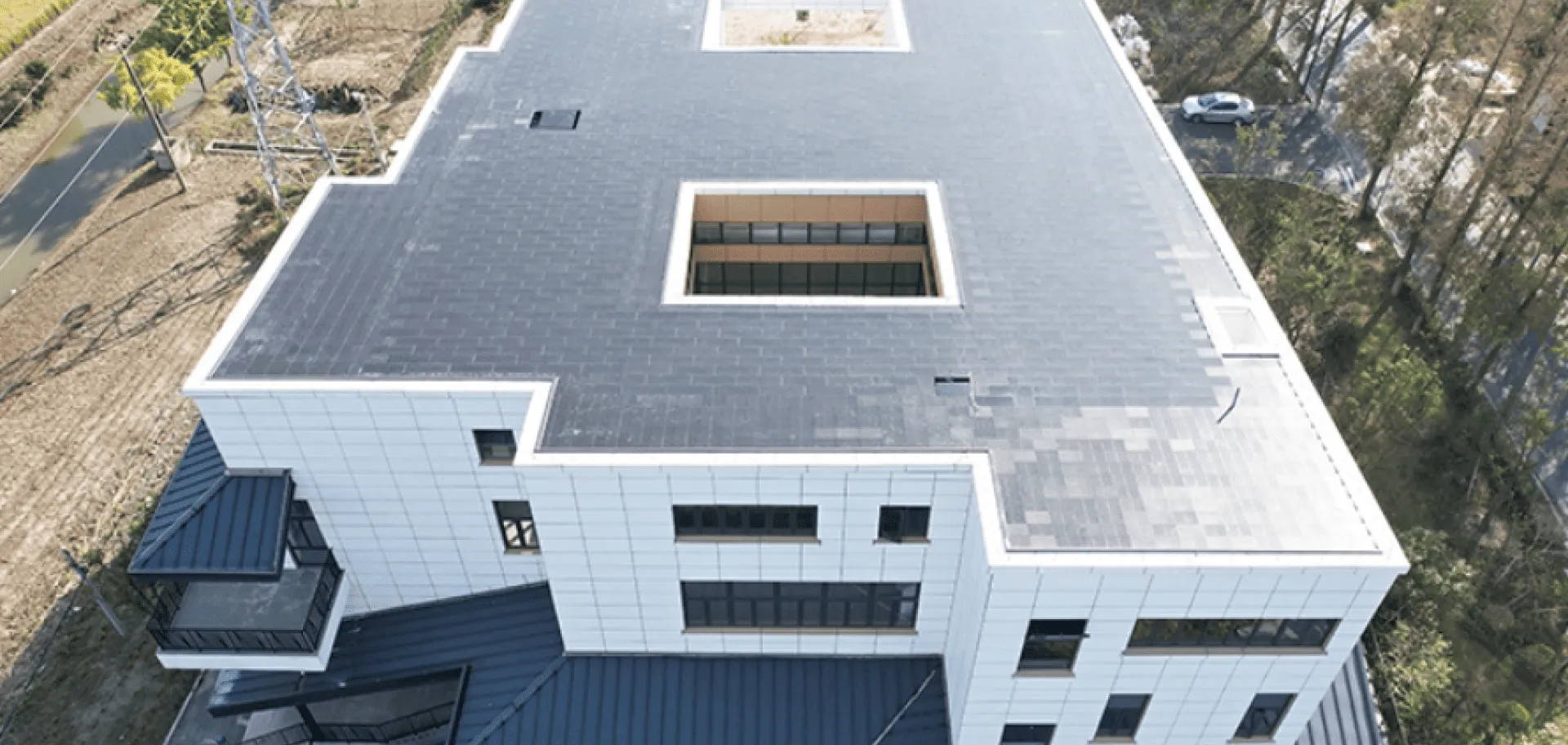

Solar technology is no longer limited to traditional rooftop panels. Today, property owners, architects, developers, and engineers can choose between conventional photovoltaic systems and solar technologies that become part of the building itself.
This leads to an important question: what is the difference between PV and BIPV?
The main difference is simple: PV systems are typically installed onto an existing building surface, while BIPV is integrated directly into the building envelope and can replace conventional construction materials.
Both technologies generate electricity from sunlight, but they differ in design, installation, cost, aesthetics, and application.
What Is PV?
PV stands for photovoltaic.
A conventional photovoltaic system uses solar modules to convert sunlight into electricity. These panels are usually mounted on top of an existing roof, façade, ground structure, or other supporting surface.
Traditional PV systems are primarily designed to generate electricity.
They do not normally replace the building material underneath them.
For example, rooftop solar panels are installed above existing roof tiles or roofing sheets using rails, brackets, or mounting systems.
Common Uses of PV Systems
Conventional photovoltaic systems are commonly used for:
- Residential rooftops
- Commercial buildings
- Industrial facilities
- Warehouses
- Solar farms
- Carports
- Ground-mounted solar installations
Their popularity comes from proven performance, wide availability, flexibility, and relatively straightforward installation.
What Is BIPV?
BIPV stands for Building-Integrated Photovoltaics.
Unlike standard solar panels, BIPV products are designed to become part of the building itself.
Instead of simply being attached to a roof or façade, building-integrated photovoltaics can replace traditional construction materials while also generating electricity.
Examples include:
- Solar roof tiles
- Photovoltaic façades
- Solar glass
- Solar skylights
- Solar cladding
- Solar shading systems
- Photovoltaic curtain walls
This combination of architecture and renewable energy is what makes BIPV different from conventional PV.
PV vs BIPV: Quick Comparison
| Feature | PV | BIPV |
|---|---|---|
| Main Function | Generate electricity | Generate electricity and serve as building material |
| Installation | Added onto an existing surface | Integrated into the building envelope |
| Appearance | Clearly visible solar system | Designed to blend with architecture |
| Best For | Existing buildings and solar retrofits | New builds and major renovations |
| Cost | Usually lower | Usually higher |
| Design Flexibility | Moderate | High |
| Installation Complexity | Generally simpler | More specialised |
| Construction Role | Separate from building material | Can replace roofing, glazing, or cladding |
The Main Difference Between PV and BIPV
The biggest difference is the relationship between the solar technology and the building.
Traditional PV systems are added to the structure.
BIPV becomes part of the structure.
A conventional solar panel may sit above roof tiles, while a BIPV product may replace those tiles completely.
Similarly, a standard PV panel can be mounted on a building façade, whereas a BIPV façade element can function as both the exterior building material and the electricity-generating surface.
How Do PV Systems Work?
Photovoltaic cells absorb sunlight and convert solar energy into direct current electricity.
An inverter then converts that electricity into alternating current for use within a property.
A conventional system generally includes:
- Solar modules
- Mounting equipment
- Inverter
- Cabling
- Protection equipment
- Monitoring system
The solar array is usually installed separately from the building materials.
This makes conventional PV relatively easy to add to existing buildings.
How Does BIPV Work?
BIPV uses the same basic photovoltaic principle but combines solar generation with a construction function.
A BIPV product may act as:
- Roofing
- Exterior cladding
- Glazing
- Shading
- Skylight material
- Building envelope protection
This means the solar component is not simply an addition to the building.
It becomes part of its architectural design.
Which Is More Suitable for Existing Buildings?
For most existing properties, conventional PV systems are generally more practical.
They can often be installed without replacing the roof or façade.
This usually means:
- Lower installation cost
- Faster project completion
- Less structural modification
- Easier system expansion
- Simpler maintenance
BIPV can still be used in renovation projects, particularly where a roof, façade, or glazing system is already being replaced.
Which Is Better for New Buildings?
BIPV can be particularly attractive for new-build projects because the solar technology can be included from the architectural design stage.
Architects and engineers can plan:
- Solar orientation
- Building shape
- Roof design
- Façade layout
- Electrical infrastructure
- Energy performance
- Visual integration
This can produce a more cohesive result than installing conventional panels after construction.
Cost Difference Between PV and BIPV
Traditional PV is usually less expensive upfront.
Because conventional panels are widely available and do not generally replace building materials, their installation can be more straightforward.
BIPV typically costs more because it combines solar technology with construction materials.
However, the comparison is not always as simple as comparing the price of solar modules.
For example, if a BIPV roof replaces both:
- Conventional roofing material
- A separate solar installation
then some construction costs are being combined.
The total project cost should therefore be assessed rather than looking only at the solar component.
Which Is More Efficient?
Traditional solar panels often offer higher photovoltaic efficiency because they are optimised specifically for electricity generation.
BIPV products may prioritise other factors such as:
- Appearance
- Transparency
- Colour
- Architectural integration
- Roofing performance
- Structural compatibility
As a result, some BIPV products may generate less electricity per square metre than high-performance conventional panels.
However, actual energy output depends on the specific product and installation.
Design and Aesthetics
This is one of the strongest advantages of BIPV.
Traditional solar panels are usually easy to identify because they are installed above the building surface.
BIPV can be designed to blend into the building.
This is particularly useful for:
- Premium residential projects
- Corporate buildings
- Hotels
- Public buildings
- Modern architectural developments
- Design-sensitive urban projects
For architects, building-integrated photovoltaics can provide greater creative flexibility.
Installation Requirements
Conventional PV installation is usually handled mainly by solar installers and electrical specialists.
BIPV projects often require closer coordination between:
- Architects
- Structural engineers
- Electrical engineers
- Roofing specialists
- Façade contractors
- Solar installers
Because BIPV is part of the building envelope, waterproofing, structural safety, thermal performance, and construction standards become especially important.
Maintenance Differences
Traditional PV panels are generally easier to access and replace.
If a panel fails, it can often be removed individually without affecting the building structure significantly.
BIPV maintenance can be more complex because the photovoltaic element may also serve as roofing, glazing, or cladding.
This means repair work may need to consider both electrical performance and building integrity.
Advantages of PV Systems
Traditional photovoltaic systems offer several benefits:
- Lower upfront cost
- Proven technology
- Wide availability
- Strong electricity generation
- Easier maintenance
- Flexible system design
- Suitable for existing buildings
They remain one of the most practical choices for residential, commercial, and industrial solar installations.
Advantages of BIPV
BIPV offers a different set of benefits:
- Better architectural integration
- Dual functionality
- Reduced visual impact
- Suitable for premium building designs
- Can replace traditional construction materials
- Supports sustainable building concepts
It can be especially valuable when solar generation is included from the beginning of a construction project.
When Should You Choose PV?
Choose conventional PV when:
- The building already exists
- The roof is in good condition
- Cost efficiency is important
- Maximum electricity output is a priority
- Easy maintenance is preferred
- You want a simpler solar installation
When Should You Choose BIPV?
Choose BIPV when:
- You are designing a new building
- A roof or façade is being replaced
- Architectural appearance is important
- You want solar technology integrated into the structure
- The project has strong sustainability goals
- You want one material to serve both building and energy functions
Is BIPV the Future of Solar Architecture?
BIPV is becoming increasingly important as buildings move toward lower-carbon and energy-efficient design.
Instead of treating solar technology as an additional system, designers can incorporate it directly into architecture.
This supports the development of buildings that do more than consume energy—they can also generate it.
However, conventional PV will continue to remain important because of its affordability, flexibility, and widespread availability.
The two technologies serve different needs rather than directly replacing one another.
Frequently Asked Questions
What does PV mean?
PV stands for photovoltaic. It refers to technology that converts sunlight directly into electricity using solar cells.
What does BIPV mean?
BIPV stands for Building-Integrated Photovoltaics. It describes solar products that generate electricity while also forming part of the building structure.
Is BIPV the same as solar panels?
Not exactly. Both use photovoltaic technology, but conventional solar panels are usually mounted onto a building, while BIPV is integrated into the building itself.
Is BIPV more expensive than PV?
BIPV usually has a higher upfront cost because it combines solar technology with building materials and often requires specialised design and installation.
Can BIPV replace roof tiles?
Yes. Certain BIPV products, such as photovoltaic roof tiles, are designed to replace conventional roofing materials while producing electricity.
Can BIPV be used on façades?
Yes. BIPV can be integrated into façades, curtain walls, cladding, glazing, and other parts of the building envelope.
Which is better for an existing building?
Conventional PV is often more practical for existing buildings because it can usually be installed without replacing roofing or façade materials.
Which is better for a new building?
BIPV can be highly suitable for new buildings because it can be incorporated into the architectural design from the beginning.
Final Thoughts
The difference between PV and BIPV comes down to integration.
Traditional PV systems are installed onto a building to generate electricity, while BIPV combines solar generation with a construction function.
Conventional PV is generally better suited to existing buildings, projects focused on cost efficiency, and installations where maximum energy output is important.
Building-integrated photovoltaics are particularly valuable for new builds and major renovations where architecture, sustainability, and solar generation need to work together.
The right choice depends on project type, budget, design goals, roof or façade condition, energy requirements, and long-term maintenance considerations.